



Updated 22 July 2026
Recent reports of a Meningitis B (MenB) outbreak in the UK, including cases among teenagers and university students, has highlighted the risks of this rapidly progressive and potentially fatal infection.
MenB remains the most common cause of bacterial meningitis in the UK, particularly affecting infants, teenagers, and young adults.
Reading the headlines about the superspreader event at Club Chemistry, it is understandable that many people feel anxious about such an outbreak. In Scotland however, the risk does remain low; cases so far are within expected levels and there is no indication any cases in Scotland are linked to the Kent outbreak. The situation remains under review, but currently Public Health Scotland does not advise of any increased risk to people in Scotland and there are no recommended changes to the vaccination program or advice.
Below is some useful information on meningitis and the vaccination program.
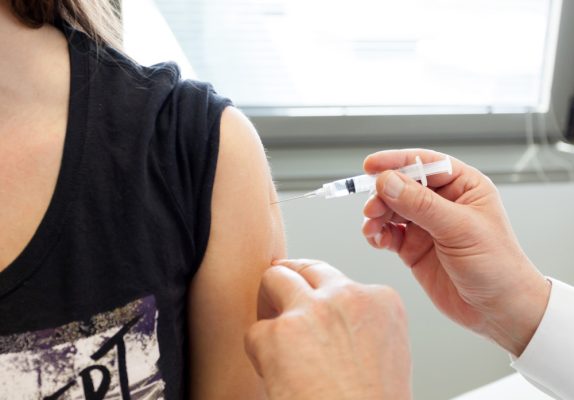
Vaccine stocks and getting you or your children vaccinated
We are pleased that we now have a stock of the Men B vaccine following the initial shortage.
Whilst there is no need for urgency there is a reasonable case to get young adults aged between 15 and 24 vaccinated.
We would recommend that a primary course or booster is given close to the highest risk time for the young adult as immunity wains quite quickly (1 to 3 years). Ideally it is given just before going to university or an equivalent environment where young adults are living in close proximity ie university, military academy, boarding school etc.
Young adults born after 2015 are likely to have had a primary course and will just need a booster. Other young adults will need a course of 2 injections.
Please email us on [email protected] and we will schedule an appointment for you.
We could consider vaccinating other at risk groups such as:
- Infants <1 year if they are not in the UK vaccine programme
- Adolescents / young adults 15 to 24
- Immunocompromised (complement deficiency, asplenia) not in the UK program
- Household contacts of a case if advised by public health
- Crowded living environments such as boarding schools, military camps, refugee camps.
What is it?
Meningitis B is a serious bacterial infection that can lead to life-threatening complications such as meningitis and sepsis. Despite its severity, the bacteria responsible for this condition are surprisingly common, and often harmless. Many people carry meningitis B bacteria in their bodies without ever becoming ill. These bacteria typically live in the nose and throat without causing any symptoms. Around 10% of the UK population carries the bacteria at any given time; among teenagers and young adults, this rises to approximately 25%. In most cases, the bacteria coexist harmlessly with the host and do not lead to disease.
Serious illness occurs only in rare situations. For meningitis or sepsis to develop, the bacteria must cross protective barriers in the body, such as the lining of the nose, and enter the bloodstream or surrounding tissues. When this happens, the infection can rapidly become severe and requires urgent medical attention.
The reasons behind more severe outbreaks are not always clear, but several factors may play a role:
• Bacterial changes: Variations or mutations may make the bacteria more aggressive
• Human behaviour: Social interactions, crowding, or lifestyle patterns can influence spread
• Environmental factors: Seasonal changes or local conditions may affect transmission
Often, it is a combination of these factors rather than a single cause. Early recognition and prompt medical care remain essential in reducing the risk of serious complications.
Understanding the Vaccines: MenB vs MenACWY
MenB vaccine
• Protects against meningococcal group B, responsible for the majority of UK cases
• Protection provided by the vaccine reduces so only lasts between 1 to 5 years
• Introduced into the UK infant vaccine programme in late 2015
• Given at:
- 8 weeks
- 12 weeks
- 1 year booster
• Not routinely offered to teenagers or adults in the NHS programme
Most adults and older children (born before 2015) have not received a primary MenB vaccination course.
MenACWY vaccine
• Protects against groups A, C, W and Y
• Routinely offered to:
- Teenagers (age 14)
- University entrants (catch-up up to age 25)
• Helps reduce carriage and transmission, unlike MenB giving some degree of “herd immunity”
• The protective effect of the vaccine lasts around 5 years
• Meningitis due to these strains does occur but the number of cases has been reduced to exceptionally low levels as a result of the vaccination program.
Who Should Consider Vaccination Now?
Infants and young children
• Should follow the routine NHS MenB schedule
• Ensure all doses are up to date
Teenagers and university students
• Should have MenACWY vaccination (essentially preferably before university)
• Consider private MenB vaccination, especially in:
- Shared accommodation
- Outbreak settings
- High-risk of exposure
Adults under the age of 25 (especially born before 2015)
• Probably not vaccinated against MenB
• Consider vaccination if:
- Living in close-contact settings
- Healthcare workers or carers
- Exposed during outbreaks
By Dr David Richardson, Director and Lead GP, Edinburgh GP

The “No-Scalpel” Vasectomy – What does that actually mean?
A GP with additional experience in dermatology can diagnose and manage a large proportion of...
Sep
Skin problems, moles and lumps – Do you really need a dermatologist?
A GP with additional experience in dermatology can diagnose and manage a large proportion of...
Sep

Mounjaro or Wegovy? Understanding the evidence behind modern weight loss medication
At Edinburgh GP, we recognise that obesity is a complex, chronic medical condition-not simply a...
Aug

National Wellness Month: Investing in your future health
Did you know that August is National Wellness Month? A reminder that our health is...
Aug
Meningitis B Outbreak
MenB remains the most common cause of bacterial meningitis in the UK, particularly affecting infants,...
Jul

Visiting Edinburgh and need to see a doctor?
Whether you are visiting Scotland on holiday or are travelling for work – no-one plans...
Jul

Cervical Cancer Screening: Understanding your options
Regular cervical screening is one of the most effective ways to detect early changes that...
Jul

Vasectomy Myth Busters: Separating fact from fiction
A vasectomy is one of the safest, simplest and most effective forms of permanent contraception...
Jul

Private Vasectomy in Edinburgh
Choosing to have a vasectomy is an important decision. For many men, it offers a...
Jun

Prostate Cancer Screening: What Jeremy Clarkson and Sir Chris Hoy remind us about early detection
Jeremy Clarkson’s recent disclosure of an aggressive prostate cancer diagnosis, apparently found early during a...
Jun

Testosterone Testing in Men: Why a blood test alone isn’t enough
Testosterone testing has become increasingly popular, driven by online testing kits, media coverage, and growing...
Mar

Six Nations, fitness and a friendly reminder from your joints
The Six Nations Championship is one of the most exciting times in the rugby calendar....
Mar